+91-83840 90738

Express Shipping

0
  • Your cart is empty

Cart Subtotal:₹0.00

Best Solar MPPT PCU in India: How to Choose the Right Solar Inverter for Home, Shops & Business (2026 Guide)

Best Solar MPPT PCU in India: How to Choose the Right Solar Inverter for Home, Shops & Business (2026 Guide)

Best Solar MPPT PCU in India: How to Choose the Right Solar Inverter for Home, Shops & Business (2026 Guide)

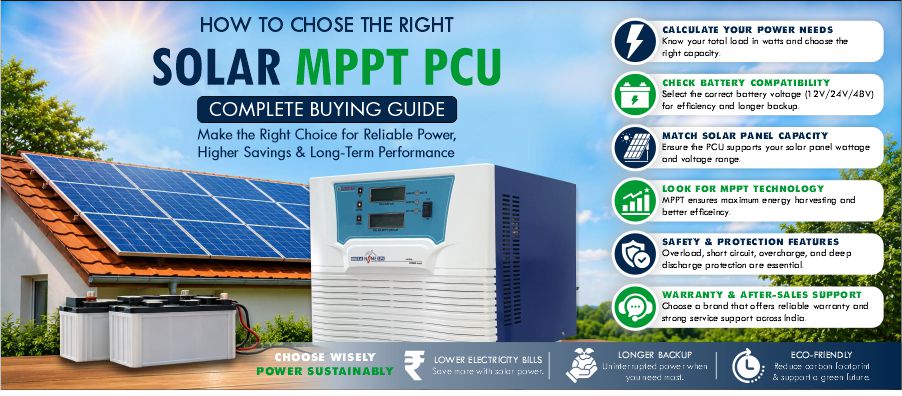
How to Choose the Best Solar MPPT PCU in India: Complete Buying Guide 2026

With rising electricity bills and increasing power outages across India, more homeowners and businesses are switching to solar energy. However, choosing the right Solar MPPT PCU is crucial for maximizing solar generation, battery life, and backup performance.If you're planning to install a solar power system, this guide will help you understand what a Solar MPPT PCU is, how it works, and the key factors to consider before buying the best Solar MPPT PCU for your home or business.

What is a Solar MPPT PCU?

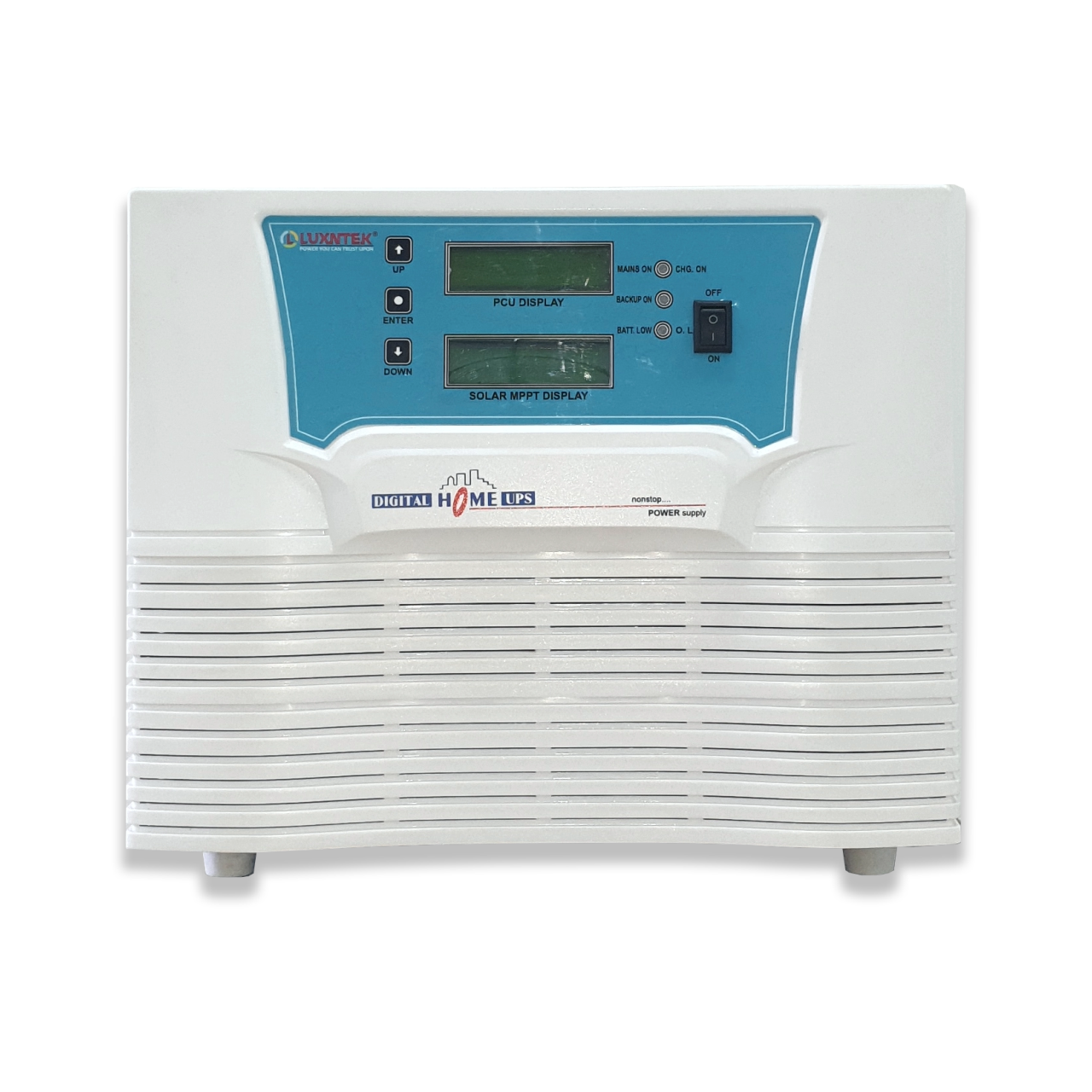
A Solar MPPT PCU (Power Conditioning Unit) is an advanced solar inverter that intelligently manages solar panels, batteries, grid power, and connected appliances.

A Solar MPPT PCU performs several important functions:

  • Converts DC power from solar panels into usable AC power
  • Charges batteries using solar energy
  • Supplies power to household loads
  • Automatically switches between solar, battery, and grid power
  • Optimizes solar energy harvesting through MPPT technology

MPPT (Maximum Power Point Tracking) technology continuously tracks the optimal operating point of solar panels, helping generate more energy even during cloudy weather, high temperatures, and partial shading conditions.This makes MPPT-based solar inverters particularly effective for Indian weather conditions.


Why MPPT Technology is Important

Traditional PWM solar charge controllers can waste a significant amount of available solar power.

An MPPT Solar PCU offers:

✔ Faster battery charging

✔ Higher solar efficiency

✔ Better performance during monsoon and winter seasons

✔ Improved energy production from solar panels

✔ Reduced electricity consumption from the grid

For homeowners looking to maximize their return on investment, MPPT technology is essential.


Step 1: Calculate Your Power Requirement

Before selecting any solar inverter, determine the total electrical load you plan to run.

Typical household appliances include:

  • LED lights
  • Ceiling fans
  • Television
  • Refrigerator
  • Laptop
  • Wi-Fi router
  • Water pump
  • Air cooler
  • Washing machine

Recommended Solar MPPT PCU Capacity

Inverter Capacity Suitable For
1kVA–2kVA Small homes, apartments, 1BHK
2kVA–3kVA Medium homes, 2BHK–3BHK
3kVA–5kVA Large homes, villas, offices
5kVA+ Commercial and industrial applications

Choosing the correct capacity ensures stable performance and reliable backup during power outages.


Step 2: Select the Right Battery Voltage

Battery voltage directly affects system efficiency and future scalability.

Common Battery Configurations

12V Systems

Best for:

  • Small homes
  • Basic backup requirements
  • Lower appliance load

A popular option is the 1kW Solar MPPT PCU, suitable for lights, fans, TV, and essential appliances.

Explore our 1kW Solar MPPT PCU Inverter (12V): https://luxntek.in/solar-mppt-pcu-inverter-1kw-12v

24V Systems

Best for:

  • Medium-sized homes
  • Higher backup requirements
  • Better charging efficiency

A 24V system reduces current losses and supports larger solar panel arrays.

Explore our 2kW Solar MPPT PCU Inverter (24V): https://luxntek.in/solar-mppt-pcu-inverter-2kw-24v

48V Systems

Best for:

  • Heavy loads
  • Commercial installations
  • Large battery banks
  • Future expansion

Higher-voltage systems generally offer better efficiency and lower cable losses.


Step 3: Match Solar Panel Capacity with the MPPT Range

One of the most common mistakes homeowners make is installing solar panels that do not match the inverter's MPPT specifications.

Always verify:

  • Maximum solar panel wattage
  • MPPT voltage range
  • Open Circuit Voltage (Voc)
  • Charging current rating
  • Future solar expansion capability

A properly matched system extracts maximum energy from solar panels and prevents power loss.


Step 4: Choose High MPPT Efficiency

The efficiency of your MPPT controller directly affects energy production.

High-efficiency MPPT Solar PCUs perform better during:

  • Cloudy weather
  • Monsoon conditions
  • Winter mornings
  • Dust accumulation
  • Partial shading

For Indian rooftop solar systems, choosing a high-efficiency MPPT inverter can significantly improve annual energy generation.


Step 5: Decide Between Off-Grid and Hybrid Solar MPPT PCU

Off-Grid Solar MPPT PCU

Suitable for:

  • Rural homes
  • Farms
  • Villages
  • Remote locations

Advantages:

  • Complete energy independence
  • Reliable battery backup
  • Reduced dependency on utility power

Hybrid Solar MPPT PCU

Suitable for:

  • Urban homes
  • Shops
  • Offices
  • Grid-connected properties

Advantages:

  • Smart solar utilization
  • Grid support during low solar generation
  • Better energy management

Hybrid solar inverters are becoming increasingly popular in Indian cities because they combine the benefits of solar, battery storage, and grid power.


Step 6: Evaluate Battery Backup Requirements

Different households require different backup durations.

Typical Backup Requirements

2–4 Hours

Suitable for:

  • Lights
  • Fans
  • Basic electronics

4–8 Hours

Suitable for:

  • Homes with moderate power consumption
  • Extended evening usage

8+ Hours

Suitable for:

  • Rural areas
  • Long power cuts
  • Commercial applications

Longer backup durations require larger battery banks and appropriately sized inverters.


Step 7: Check Safety Features

A quality Solar MPPT PCU should include comprehensive protection mechanisms.

Essential features include:

  • Overload protection
  • Short-circuit protection
  • Over-temperature protection
  • Surge protection
  • Deep discharge protection
  • Battery reverse polarity protection
  • Intelligent charging control

These protections help increase system reliability and battery lifespan.


Step 8: Consider Build Quality

Indian environmental conditions can be challenging for electronic equipment.

Choose a Solar MPPT PCU designed for:

  • High temperatures
  • Dusty environments
  • Humid conditions
  • Continuous operation

Look for:

  • Advanced cooling systems
  • Industrial-grade PCB design
  • High-quality components
  • Robust transformer construction
  • Efficient thermal management

Better build quality typically translates into lower maintenance costs and longer product life.


Step 9: Verify Warranty and Service Support

A solar inverter is a long-term investment.

Before purchasing, check:

  • Warranty coverage
  • Service center availability
  • Technical support
  • Spare parts availability
  • Installation assistance

Reliable after-sales support can save both time and money over the life of the system.


Step 10: Focus on Value Rather Than Price

Many buyers compare only prices, but long-term performance matters more.

Evaluate:

  • Solar efficiency
  • Charging performance
  • Battery health management
  • Backup reliability
  • Maintenance costs
  • Expansion capability
  • Return on investment (ROI)

A higher-quality Solar MPPT PCU often provides better savings over its lifetime than a cheaper alternative.


Common Mistakes to Avoid

Avoid these common buying mistakes:

❌ Selecting an inverter based only on price

❌ Choosing the wrong battery voltage

❌ Ignoring solar panel compatibility

❌ Purchasing a low-efficiency MPPT system

❌ Overlooking warranty and service support

❌ Not planning for future expansion

Avoiding these mistakes can significantly improve system performance and long-term satisfaction.


Which Solar MPPT PCU is Best for Home Use?

The ideal Solar MPPT PCU depends on:

  • Home size
  • Daily power consumption
  • Backup requirements
  • Battery bank size
  • Available rooftop solar capacity
  • Budget
  • Future energy needs

Popular Choices

1kW Solar MPPT PCU

  • Small homes
  • Basic backup requirements

2kW Solar MPPT PCU

  • Most Indian households
  • Better backup and solar capacity

3kW–5kW Solar MPPT PCU

  • Large homes
  • Shops and offices

5kW+ Systems

  • Commercial and industrial applications

Conclusion

Choosing the best Solar MPPT PCU in India requires careful evaluation of your power requirements, battery voltage, solar panel capacity, backup expectations, and future expansion plans.

Whether you need a compact 1kW Solar MPPT PCU for essential home backup or a 2kW Solar MPPT PCU for a larger household, selecting the right system ensures maximum solar savings, reliable backup power, and long-term performance.

Investing in a high-quality MPPT Solar PCU today can help reduce electricity bills, improve energy independence, and provide dependable power for years to come.


0 Comments

No approved comments yet.

Leave a comment

Please note, comments must be approved before they are published